


1 Layer vs 2 Layer vs 4 Layer Muslin: What Is the Difference?
Muslin is often described simply as a lightweight cotton fabric, but that description leaves out an important detail: muslin can be made in very different constructions. One of the most noticeable differences is the number of layers.
When you are choosing between 1-layer, 2-layer and 4-layer muslin, the difference is not just about thickness. The number of layers changes how the fabric feels, how much it covers, how warm it can feel, how it drapes and where it is most useful.
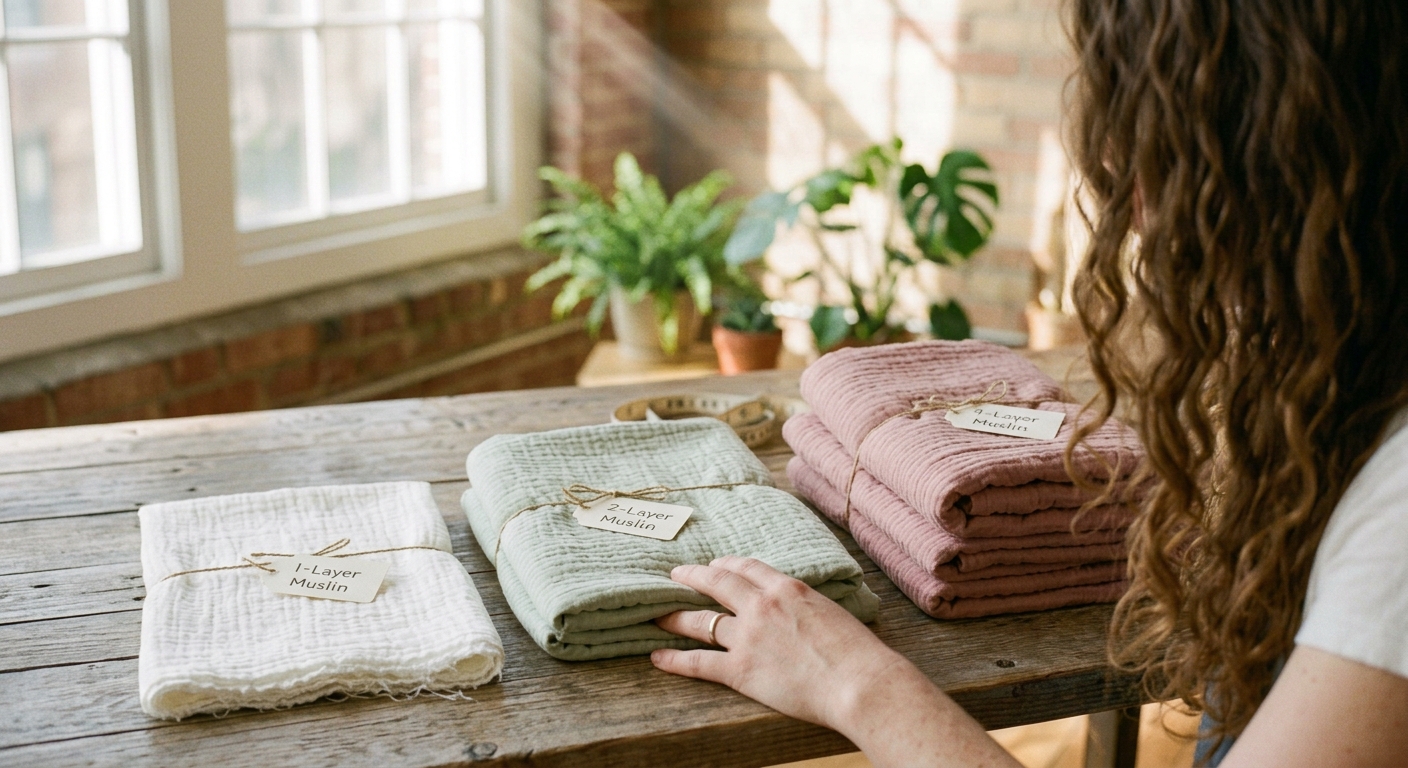
This is especially important when choosing muslin for clothing, bedding, children’s products or other home textiles. Two fabrics can both be called muslin but behave quite differently in use.
What Does “Layer” Mean in Muslin Fabric?
A layer refers to a separate layer of woven fabric within the finished material. With 1-layer muslin, there is a single layer of woven fabric. With 2-layer muslin, two layers are combined, and 4-layer muslin contains four layers.
This should not be confused with simply making a single fabric thicker by using heavier yarn or a tighter weave. Layered muslin has a different construction, and the spaces between the layers also affect the way the finished fabric feels and behaves.
Double gauze, for example, is made by combining two layers of gauze while retaining the light and breathable character associated with the fabric.
The term muslin itself covers a range of cotton fabrics rather than one exact specification. Traditional definitions describe muslin as a plain-woven cotton fabric, with different qualities and weights produced for different purposes.
1-Layer Muslin
1-layer muslin is the lightest and most open of the three constructions. Because there is only one layer, the fabric has a light hand and allows plenty of air to pass through it.
It is particularly useful when low weight and breathability are more important than coverage. It can work well for lightweight clothing, decorative textiles, sewing projects and other applications where a soft, thin cotton fabric is wanted.
The main limitation is coverage. Depending on the weave, color and lighting, 1-layer muslin can be quite transparent. A white or very light-colored fabric will usually show more through than a darker color.
For clothing, this means that 1-layer muslin may work better as a loose summer garment, an outer layer, or a fabric that is intentionally lightweight and slightly transparent rather than as a completely opaque material.
2-Layer Muslin
2-layer muslin provides a useful middle ground. The second layer gives the fabric more body and coverage while keeping much of the light, airy character of muslin.
It generally feels fuller than 1-layer muslin without becoming heavy. This makes it suitable for applications where a single layer feels too thin but a heavier construction is unnecessary.
For clothing, 2-layer muslin can be a good choice when you want a soft and comfortable fabric with more coverage. It can also work well for children’s textiles, bedding and other home textile products where a little more substance is useful.
The two layers also give the fabric a different appearance when it hangs or folds. Instead of behaving like a very thin sheet, it has more volume and tends to create a softer, fuller drape.
4-Layer Muslin
4-layer muslin is the fullest of the three constructions. Four layers give the fabric noticeably more body, coverage and warmth than a single layer.
That does not mean that 4-layer muslin becomes a heavy fabric in the same way as a thick winter textile. Muslin remains a breathable cotton material, but the additional layers trap more air within the structure and create a fuller fabric.
This makes 4-layer muslin particularly interesting for bedding, blankets, children’s bedroom textiles and other products where softness and a little more warmth are desirable.
It can also be used for clothing, especially when a fuller and less transparent fabric is wanted. However, whether 4-layer muslin is suitable for a particular garment depends on the design, climate and desired feel. A four-layer fabric will naturally feel warmer than a single-layer version of the same basic material.
Does More Layers Mean More Warmth?
Generally, yes, but the difference is not as simple as saying that four layers are four times warmer than one layer.
Warmth in a fabric depends on several things, including its weight, thickness, construction, trapped air and how easily air can move through it. Cotton itself is also a breathable fiber with a natural ability to absorb moisture.
Adding layers changes the amount of material between the body and the outside air and can create more spaces in which air is held. As a result, 4-layer muslin will normally feel warmer and provide more coverage than 2-layer muslin, while 2-layer muslin will normally feel warmer than 1-layer muslin.
This does not make 4-layer muslin a winter fabric by definition. It is still cotton muslin, and its breathability remains one of its useful characteristics.
For hot weather clothing, 1-layer and 2-layer muslin are often more suitable when maximum lightness and airflow are wanted. For bedding or children’s textiles where a little more warmth and coverage are useful, 2-layer or 4-layer constructions can make more sense.
Which Muslin Layer Absorbs More Water?
Cotton naturally has an affinity for water, so cotton fabrics can absorb moisture.
Adding layers increases the amount of cotton fabric present, so a 4-layer muslin product can hold more water overall than a comparable 1-layer piece of the same size. However, this does not necessarily mean that water will move through the fabric more quickly.
The open construction of muslin also allows moisture and air to move through the fabric. This is one reason lightweight cotton muslin can feel comfortable in warm conditions.
There is therefore a difference between absorbency and drying speed. A thicker piece can absorb more moisture but may take longer to dry simply because there is more material holding that moisture.
How Does the Fabric Feel as the Number of Layers Increases?
The difference can usually be felt immediately when handling the fabrics.
1-layer muslin feels thin, light and airy. It has very little bulk and moves easily.
2-layer muslin feels fuller while still remaining light. It has more body and coverage, but it does not lose the soft character associated with muslin.
4-layer muslin feels substantially thicker and softer in volume. It has more substance in the hand and provides much more coverage than a single layer.
The important point is that more layers do not necessarily mean a less comfortable fabric. The additional layers can actually make muslin feel softer and more substantial, particularly in bedding and children’s textiles.
What About Transparency?
Transparency is one of the easiest differences to notice.
A single layer of loosely woven cotton can allow considerable light through the fabric. This is not necessarily a defect. It is simply a result of the light construction.
Adding a second layer reduces the amount of light passing through the material. Four layers provide considerably more coverage and are much less transparent.
Color also matters. A dark-colored 1-layer fabric may appear less transparent than a white 1-layer fabric, even though their construction is the same. Printed designs can also change the visual appearance of the fabric.
This is why choosing muslin based only on the name of the fabric can be misleading. The layer construction, color, weave and finishing all contribute to how the finished material looks and feels.
Which Layer Is Best for Clothing?
There is no single best layer for every garment.
1-layer muslin is useful when the goal is an extremely light and airy garment. It can be particularly appropriate for loose summer clothing where some transparency is acceptable.
2-layer muslin is a more balanced option when you want softness and breathability together with additional coverage. It can be suitable for dresses, shirts, children’s clothing and relaxed garments.
4-layer muslin is better suited to garments where a fuller fabric is wanted. It can provide more coverage and a warmer feel, although it may be more fabric than necessary for very hot-weather clothing.
The garment itself matters just as much as the fabric. A loose dress and a fitted shirt have different requirements, even when they are made from the same muslin.
Which Layer Is Best for Bedding and Children’s Textiles?
For bedding and children’s products, the choice often comes down to how much coverage and warmth is wanted.
1-layer muslin can be useful for lightweight decorative textiles and products where maximum airflow is important. 2-layer muslin offers more body without becoming overly thick, making it a practical choice for many home textile applications.
4-layer muslin is particularly useful when the product needs more volume and warmth. This makes it a natural choice for blankets, children’s bedroom textiles and other products where a fuller cotton fabric is preferred.
Muslin has long been used for clothing and household textiles, and its uses include bedding, quilting, curtains and sewing.
Does 4-Layer Muslin Need More Care?
Not necessarily, but the extra material can affect washing and drying time.
All cotton muslin can change slightly after washing, particularly if it has not been pre-shrunk. Thicker constructions contain more material, so they can take longer to dry.
The safest approach is to follow the care instructions supplied with the specific fabric. Washing temperature, finishing treatments, dyes and printing can all affect how a particular muslin behaves.
It is also worth remembering that wrinkles are normal for lightweight cotton fabrics. Trying to make muslin look completely flat can sometimes remove part of the relaxed appearance that makes the fabric attractive in the first place.
How Should You Choose Between 1, 2 and 4 Layers?
The simplest way to think about the three constructions is to start with the result you want from the finished product.
If you want the lightest possible fabric with maximum airflow, 1-layer muslin is the natural starting point. If you want a little more coverage and body while keeping the fabric light, 2-layer muslin is a good middle option. If you want more coverage, volume and warmth, 4-layer muslin is the better choice.
There is no universal winner. The right construction depends on whether the fabric is going to become a summer garment, children’s clothing, bedding, a blanket or another home textile.
Conclusion
The difference between 1-layer, 2-layer and 4-layer muslin is mainly a difference in construction, thickness, coverage and the amount of material in the finished fabric.
1-layer muslin is lightest and most breathable but can be relatively transparent. 2-layer muslin adds coverage and body while remaining light and comfortable. 4-layer muslin provides the greatest coverage, fullness and warmth of the three while still retaining the soft and breathable character of cotton muslin.
For clothing, the lighter constructions are often better when airflow is the priority. For bedding, blankets and children’s bedroom textiles, the additional body of 2-layer or 4-layer muslin can be useful.
The best choice therefore depends less on which layer is “better” and more on what you are making and how you want the finished textile to feel.
If you are looking for different constructions, colors and designs, you can see our muslin fabric collection to compare the available options.