


How Is Muslin Fabric Made? From Cotton Yarn to Finished Fabric
Muslin looks like a simple fabric, but there is quite a lot of work between a bale of cotton and the finished fabric you see in a fabric shop.
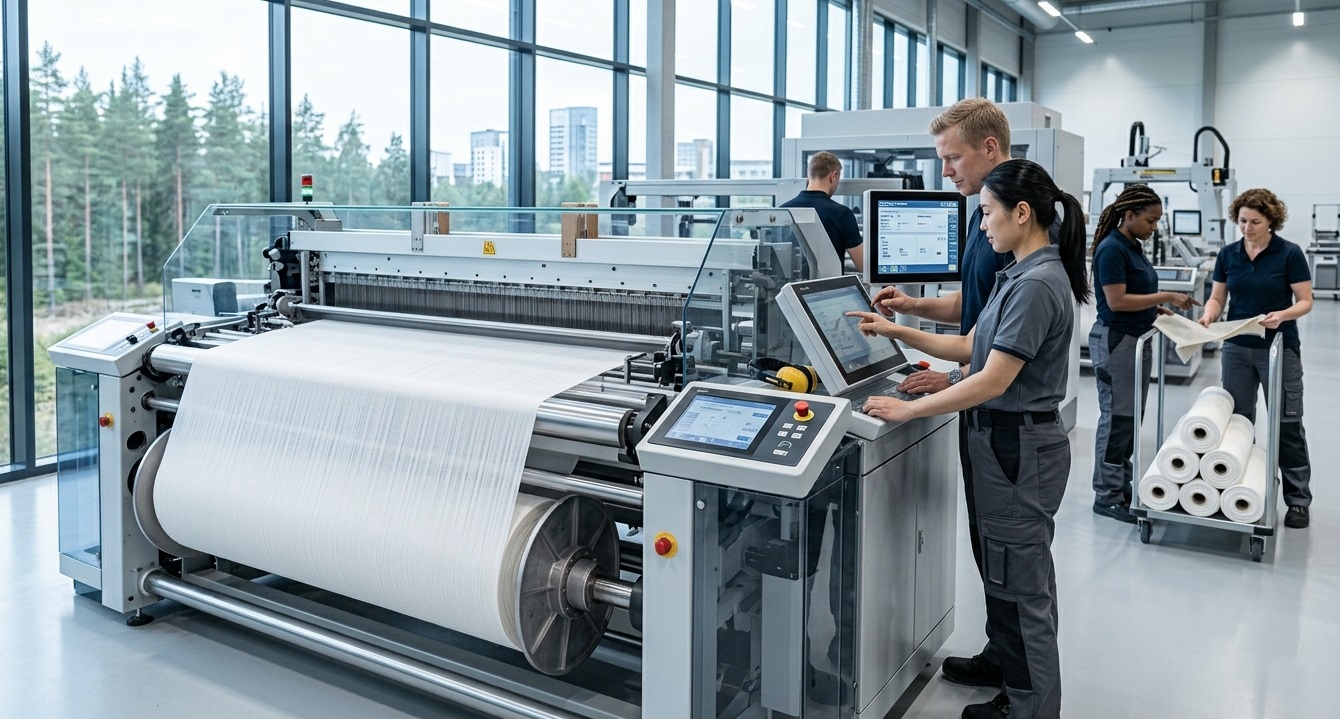
The process begins with cotton fiber. The fiber is cleaned and prepared, spun into yarn, and then woven into fabric. After weaving, the fabric goes through several preparation and finishing processes before it is ready to be dyed, printed, cut and sold.
The exact process varies from one mill to another, and different types of muslin can be produced by changing the yarn, weave construction, fabric density, number of layers and finishing processes.
It Starts With Cotton Fiber
Cotton begins as a natural fiber that grows around the seeds of the cotton plant. After harvesting, the raw cotton contains more than just the fibers that will eventually become yarn. It can contain plant material, dust and other unwanted matter that needs to be removed.
The first stage of textile production is therefore preparation and cleaning.
Modern cotton processing uses several stages to open and clean the fiber. The fibers are separated, cleaned and arranged so they can be processed consistently. According to CottonWorks, carding is a fundamental part of yarn manufacturing because it transforms loose cotton fibers into a continuous form called sliver.
The quality of this preparation matters because irregular or contaminated fiber can affect the yarn and, eventually, the appearance and performance of the finished fabric.
From Cotton Fiber to Yarn
Cleaned cotton fibers cannot simply be put into a loom. They first need to be turned into yarn.
The prepared fibers are gradually drawn out and aligned, reducing their thickness and bringing them into a more uniform strand. Depending on the type of yarn being produced, the fibers can then be spun using different spinning systems.
One established method is ring spinning, where the fibers are drafted and twisted to form yarn. Other systems include rotor or open-end spinning and air-jet spinning. Each method produces yarn with somewhat different characteristics.
The yarn selected for muslin has a direct effect on the final fabric. Yarn thickness, twist and quality all influence how the fabric feels, how open its construction can be and how it looks after finishing.
This is one reason why two fabrics that are both called muslin can feel quite different.
Preparing the Yarn for Weaving
Once the yarn has been produced, it needs to be prepared for the weaving machine.
The yarns that run along the length of the fabric are called warp yarns. They are placed under tension and arranged parallel to each other on a loom beam.
This preparation is important because warp yarns experience considerable tension and friction during weaving. They need to be strong and uniform enough to pass through the loom without excessive breakage.
For some woven fabrics, the warp yarn is treated with a sizing material before weaving. Sizing helps reduce surface hairiness, increase abrasion resistance and improve yarn strength while it is going through the loom. The sizing is normally removed later during fabric preparation.
How Is Muslin Woven?
Muslin is generally a woven cotton fabric, rather than a knitted fabric.
Weaving means interlacing two sets of yarn. The warp yarns run along the length of the fabric, while the weft yarns are inserted across its width. The loom repeatedly raises and lowers selected warp yarns to create an opening through which the weft yarn passes.
For traditional plain-woven muslin, the basic principle is relatively simple. The warp and weft yarns cross each other in a regular pattern.
But simple does not mean unimportant. The number and size of the yarns, their spacing and the tension used during weaving all affect the final fabric.
A more open construction allows more air and light to pass through. A denser construction provides more coverage and creates a different hand and appearance.
Why Is Muslin Lightweight?
One of the characteristics associated with muslin is its relatively light and open construction.
This is controlled during fabric development by factors such as yarn size and the number of warp and weft yarns used over a given area. CottonWorks notes that a lower number of ends and picks per inch can be used when a more sheer fabric is wanted.
This helps explain why muslin can feel so different from a dense cotton fabric such as a heavy twill or tightly woven canvas.
The open construction allows air to move more easily through the material and gives the fabric its characteristic lightness.
What Happens After the Fabric Comes Off the Loom?
The fabric that comes directly from the loom is not necessarily the final fabric that will be sold.
Woven cotton can contain sizing, natural impurities and other materials introduced during manufacturing. It may also have a surface and handle that are different from the final product.
The fabric therefore goes through preparation processes designed to clean it and prepare it for further treatment.
One important process is desizing, which removes sizing that was applied to the warp yarn before weaving. Depending on the fabric and production route, other preparation processes may also be used to clean and prepare the cotton for dyeing or printing.
The exact sequence depends on the type of fabric being produced.
Bleaching and Preparing the Fabric for Color
If a clean white or very even base is required, the fabric can be bleached after preparation.
Bleaching removes much of the natural color remaining in the cotton and creates a more consistent base for subsequent dyeing or printing.
Not every muslin needs to be bleached. A manufacturer may deliberately keep a natural or unbleached appearance, depending on the intended product.
This is why terms such as bleached muslin and unbleached muslin refer to more than just the color you see. They describe different stages of fabric preparation and different finished appearances.
How Is Colored Muslin Made?
Once the fabric has been prepared, it can be dyed.
In dyeing, color is introduced into the textile so that the fibers take up the dye. The exact dyeing method depends on the fiber, color requirements and production process.
For plain colored muslin, the entire fabric can be dyed to produce a consistent color across the material.
The color can affect more than appearance. Dark and saturated colors may behave differently during washing than very pale colors, and the finishing process can also influence the final shade and feel.
For fabric manufacturers, achieving a consistent color across a large production run is an important part of quality control.
How Is Printed Muslin Made?
Printed muslin follows a different route from plain dyed muslin.
Instead of coloring the entire fabric with one overall shade, a design is transferred onto the fabric. The printing method can vary depending on the type of design, production volume, fabric and required result.
This is how a plain white or light-colored muslin base can become a fabric covered with flowers, animals, geometric patterns, children’s illustrations or other designs.
Printing requires careful control of color, registration and fabric movement. A repeating design needs to line up correctly as it is transferred across the width and length of the fabric.
For printed children’s muslin, the quality of both the fabric and the print matters. A beautiful design is only useful if the underlying fabric still has the softness, weight and construction required for the finished product.
How Are 1-Layer, 2-Layer and 4-Layer Muslin Made?
The number of layers is another important part of muslin construction.
A 1-layer muslin consists of a single layer of woven fabric. It is lightweight, airy and generally more transparent.
A 2-layer muslin combines two layers of woven fabric. The additional layer gives the material more body and coverage while keeping it relatively light.
A 4-layer muslin uses four layers, producing a fuller and thicker finished material with more coverage and a warmer feel.
The layers are constructed together so that they behave as one textile. The exact method and construction can vary between manufacturers, which means that two 4-layer muslin fabrics are not necessarily identical.
The number of layers is therefore only one part of the specification. Yarn, fabric density, finishing and weight also matter.
Finishing Gives Muslin Its Final Character
After weaving, dyeing or printing, the fabric may undergo several finishing processes.
Finishing is where many of the qualities that people notice when handling fabric can be adjusted. Depending on the product, finishing can influence softness, smoothness, width, shrinkage, appearance and dimensional stability.
Mechanical finishing can include controlled drying, compaction, calendering and other treatments. For example, tenter frames can be used to control fabric width and help reduce shrinkage, while compaction can shorten the fabric in a controlled way to reduce later length shrinkage.
Chemical finishing can also be used to give textiles particular properties or modify their handle. CottonWorks describes finishing as a stage that can affect the appearance, performance, serviceability and hand of a textile.
Not every muslin goes through the same finishing process. The desired end use determines what treatments are appropriate.
Why Does Muslin Become Softer After Washing?
Many people notice that cotton muslin becomes softer after it has been washed.
Part of this comes from the fabric structure itself. Washing allows the yarns and fibers to relax, while repeated laundering can change the surface feel of cotton textiles.
The effect depends on the particular fabric. Finishing treatments, yarn construction, weave density and the number of layers can all influence how the fabric changes with use.
This is also why a fabric should not be judged entirely by how it feels directly after coming from the mill. The finished textile may develop a different hand after its first few washes.
Quality Control Before the Fabric Is Sold
Before finished muslin reaches a fabric buyer, it can be inspected for problems such as uneven color, printing defects, weaving faults, incorrect width and other variations.
For printed fabric, the design needs to be checked as well as the underlying cloth. Problems with color matching, print alignment or repeated motifs can make a fabric unsuitable for production.
For manufacturers buying fabric by the meter or by the bolt, consistency is particularly important. A fabric that looks good in a small sample also needs to remain consistent across the production quantity.
From Finished Fabric to Clothing and Home Textiles
Once the fabric has completed its manufacturing and finishing stages, it can be rolled, inspected, packed and sent to customers.
At that point, muslin is no longer just cotton yarn woven into a cloth. Its final characteristics have been determined by the combination of fiber, yarn, weaving construction, layers, dyeing or printing and finishing.
The finished material can then be turned into clothing, bedding, blankets, children’s textiles, curtains and many other products.
This is also why choosing muslin based only on its name can be misleading. The actual construction and specifications of the fabric are what determine how it will behave in the finished product.
Conclusion
Making muslin fabric starts with cotton fiber and ends with a finished textile that may look very simple. Between those two points, the cotton is cleaned and prepared, spun into yarn, prepared for weaving and woven into fabric.
The woven fabric is then cleaned and prepared for dyeing or printing. It may be bleached, dyed, printed and finished to achieve the required color, softness, width, shrinkage and overall appearance.
The construction of the fabric can also be changed to create different types of muslin. A single layer produces a very light fabric, while 2-layer and 4-layer constructions provide progressively more body and coverage.
So when we talk about muslin fabric, we are not talking about one completely fixed material. The final fabric is the result of many decisions made during spinning, weaving, coloring and finishing.
For different layer constructions, plain colors and printed designs for home textiles and clothing, you can explore Selonya’s muslin fabric.