


Turkish Flannel Fabric Wholesale
Flannel Fabric: Soft, Comfortable and Naturally Cotton
Flannel fabric is a soft woven textile recognized by its gently raised surface and comfortable hand feel. Traditionally associated with wool, modern flannel is also widely produced from cotton and other fibers. Cotton flannel is especially appreciated for its natural feel, soft touch and suitability for apparel and home textile products.
The characteristic surface of flannel is generally created through a brushing or napping process that gently raises fibers from the woven fabric. This gives the fabric a softer surface and a distinctive tactile quality.
The final characteristics of a flannel fabric depend on several factors, including fiber composition, yarn specification, construction, fabric weight and finishing. For this reason, flannel fabrics from different manufacturers can have noticeably different appearances and hand feels even when they are sold under the same name.
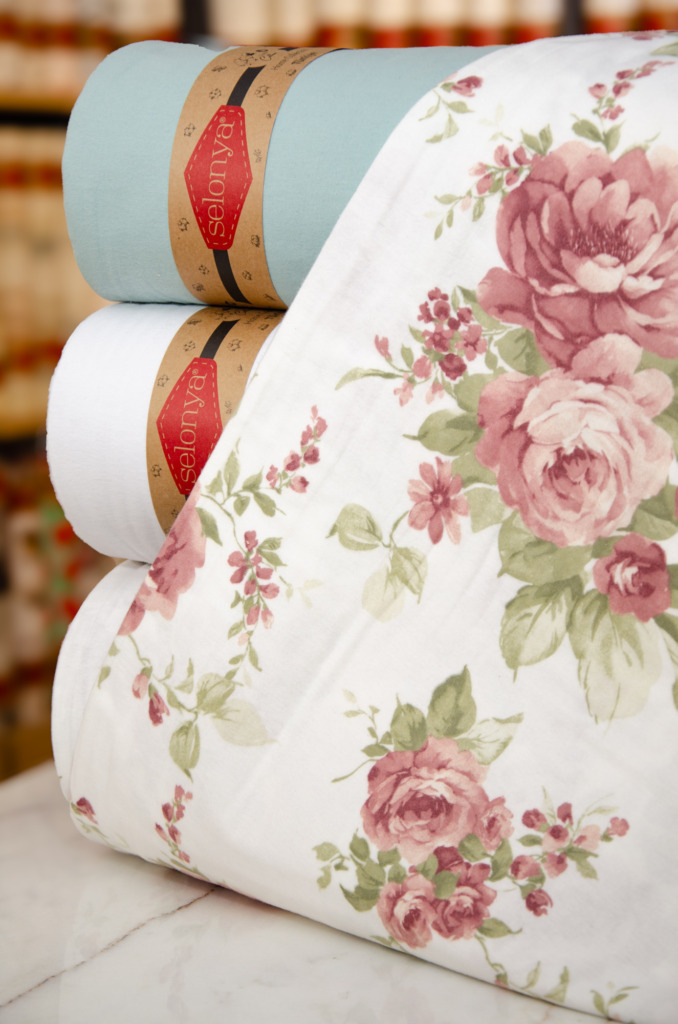
What Is Flannel Fabric?
Flannel is a woven fabric with a characteristically soft, slightly raised or brushed surface. The surface treatment lifts some of the fibers from the woven structure, creating the soft texture for which flannel is known.
While flannel can be produced using different fibers, cotton flannel fabric is particularly popular for textile products where a natural fiber and soft surface are desired. Cotton also gives manufacturers a suitable base for a wide range of colors, prints and designs.
The weight and construction of the fabric should be considered together with its surface finish. A lightweight flannel may have a different feel and application from a heavier construction, even when both are made from cotton.
The Origin of the Name “Flannel”
The word “flannel” is generally believed to have originated from the Welsh word gwlanen, associated with woolen cloth. The fabric has a long history in European textile production and was originally associated largely with wool.
Over time, cotton became an important material for flannel production. Today, cotton flannel is used in many different textile products, particularly in apparel, children’s textiles, bedding and home textiles.
Modern flannel is therefore not defined by a single fiber or construction. Its properties depend on the materials and manufacturing processes used to produce it.
Turkish Flannel Fabric and the Turkish Textile Industry
Türkiye has a long-established textile manufacturing industry and is an important supplier of fabrics and home textiles to international markets. The country has developed a substantial textile production infrastructure covering yarns, woven fabrics, dyeing, finishing and other stages of textile manufacturing.
According to the Istanbul Textile and Raw Materials Exporters’ Association (İTHİB), Türkiye’s textile industry exported approximately US$11.4 billion in 2025, with the European Union representing around 40% of textile exports. Türkiye is also an established supplier of woven fabrics and textile products to markets in Europe, the Middle East and other regions.
This manufacturing background is relevant to buyers looking for Turkish fabric, because Turkish textile companies can supply a broad range of fabrics and specifications for international production.
Turkish Flannel Fabric for International Buyers
Buyers searching for Turkish flannel fabric can source cotton flannel from an established textile manufacturing market with extensive export experience.
Flannel produced in Türkiye can be supplied in different compositions, weights, widths, constructions, colors and designs according to the requirements of the manufacturer and the intended end product.
Turkey’s geographical position also makes the country a practical sourcing location for buyers in nearby European, Middle Eastern and Mediterranean markets. Established road, sea and air connections support the international movement of Turkish textile products.
For buyers looking for a Turkish flannel fabric supplier, product specifications, production consistency, quality control and export experience are important factors to consider alongside price.
Selonya Flannel Fabric: Technical Specifications
Selonya Flannel is produced from 100% natural cotton and is available in a 240 cm width. Its technical specifications are provided below.
| Specification | Details |
|---|---|
| Type / Type No. | SELONYA FLANNEL |
| Composition | 100% Natural Cotton |
| Quality | 31 Wire 20/1 – 8/1 |
| Weight | 150 g/m² ±5% |
| Width | 240 cm |
The 100% natural cotton composition gives the fabric a natural fiber base and a comfortable hand feel. The specified weight of 150 g/m² ±5% provides a relatively lightweight construction suitable for a range of textile applications.
The 240 cm width can be particularly useful for home textile and other applications where wider fabric is advantageous. The yarn specification and fabric construction also contribute to the final appearance, hand feel and performance of the material.
When sourcing fabric for production, buyers should evaluate the complete technical specification rather than considering weight or composition alone. Width, yarn, construction, finishing and dimensional behavior can all affect the suitability of the fabric for a particular product.
Characteristics of Cotton Flannel
The main characteristic of cotton flannel fabric is its soft surface. The brushing or napping process creates a gentle raised texture that distinguishes flannel from many smooth-surface woven cotton fabrics.
Cotton flannel also provides a natural fiber option for manufacturers who prefer cotton-based materials. Its appearance can range from simple and understated to highly decorative depending on the color, print and finishing.
The fabric’s final performance is influenced by its construction and finishing. For this reason, buyers should select the appropriate specification according to the intended application rather than assuming that all flannel fabrics have identical properties.
Where Is Flannel Fabric Used?
Flannel fabric is used in a variety of apparel and home textile products. Its soft surface makes it suitable for products where comfort and a pleasant hand feel are important.
Common applications include pajamas, sleepwear, loungewear, casual shirts, children’s clothing, baby textiles, bedding, bed covers, blankets and other home textile products.
Cotton flannel can also be used for various cut-and-sew applications where a soft woven cotton surface is desired. The appropriate weight, construction and finishing should be selected according to the requirements of the finished product.
Flannel, Cotton Poplin and Gofre
Flannel, cotton poplin and gofre are different woven fabrics with distinct surface characteristics.
Flannel has a soft, gently raised or brushed surface. Its characteristic texture makes it suitable for products where a softer hand feel is required.
Cotton poplin generally has a smooth, closely woven surface and a crisper hand. It is commonly used for shirts, lightweight garments and other applications where a clean woven structure is preferred.
Gofre has a distinctive puckered, embossed or textured surface. Its three-dimensional appearance gives garments and home textile products a different visual and tactile character.
The choice between these fabrics depends on the desired appearance, hand feel, weight, construction and intended end use.
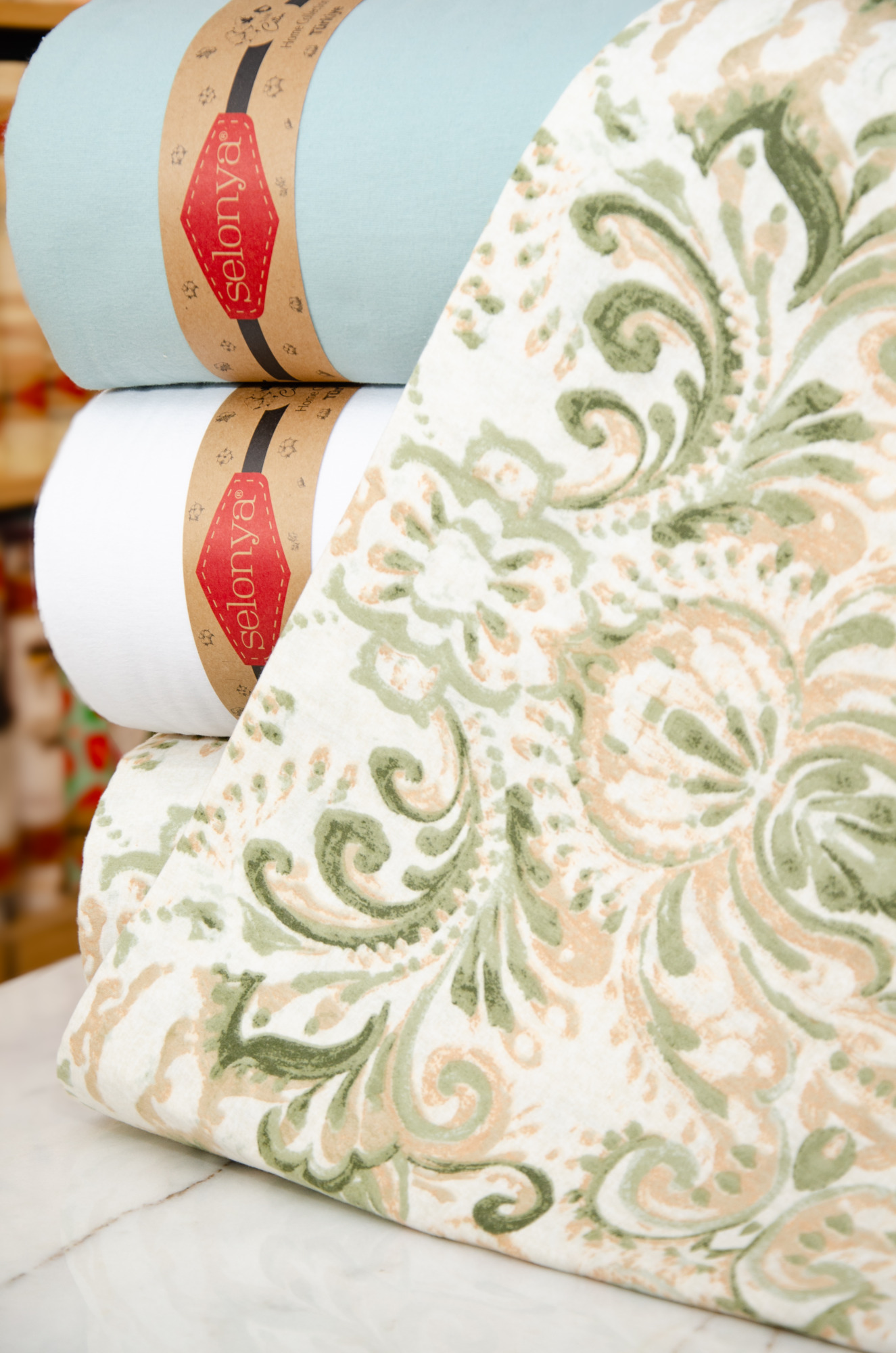
Flannel Colors, Prints and Designs
Flannel fabric can be produced in a wide range of colors and patterns. Plain colors are suitable for simple and classic products, while printed fabrics allow manufacturers to create more decorative designs.
Floral patterns are frequently used for apparel and home textiles, while geometric patterns and repeating motifs can provide a more contemporary appearance. White and other light-colored flannel fabrics can provide a clean base for different applications and design concepts.
Selonya offers flannel designs for textile manufacturers and wholesale buyers looking for different colors and patterns. The appropriate design can be selected according to the intended product, market and production requirements.
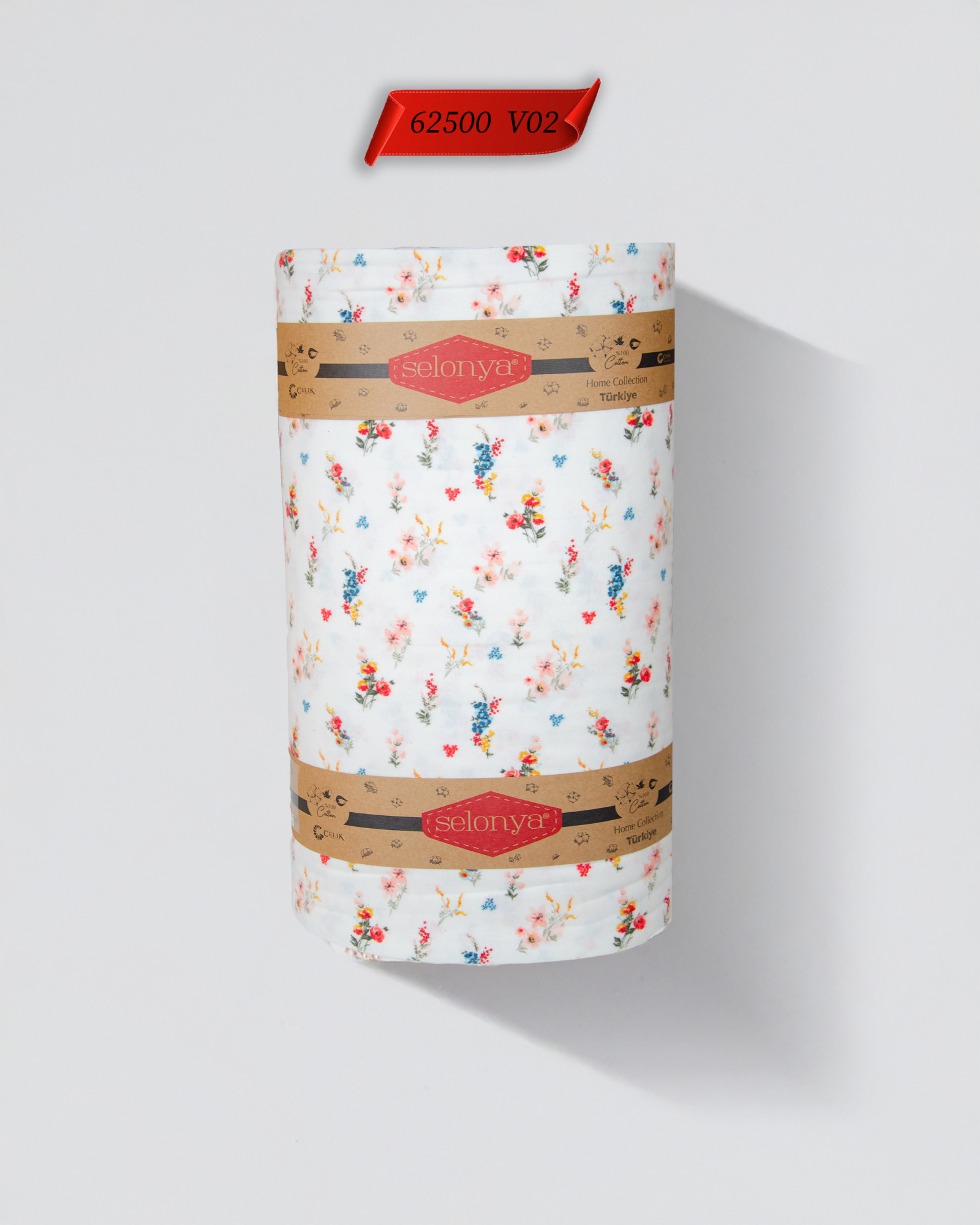
Wholesale Flannel Fabric
For wholesale textile buyers, selecting the right fabric involves more than comparing the price per meter. Technical specifications, production consistency, usable width, composition, weight and finishing should all be considered before placing an order.
For manufacturers, consistent fabric specifications are particularly important when the same material will be used across repeated production runs. Differences in weight, width, surface finish or construction can affect cutting, sewing and the appearance of the finished product.
When purchasing wholesale flannel fabric, buyers should therefore evaluate the complete specification and discuss their intended application with the fabric supplier. Sampling the actual fabric before large-scale production can also help manufacturers evaluate the hand feel, appearance and suitability of the material.
Flannel Fabric Price
The price of flannel fabric depends on several factors, including fiber composition, yarn specification, fabric weight, construction, finishing, color, printing and order quantity.
Printed and specially finished fabrics may have different prices from standard plain fabrics. Wholesale quantities can also influence the final price depending on the product specification and production requirements.
For this reason, price per meter should be considered together with the fabric’s width, weight, composition, quality and production consistency. A wider fabric, for example, can provide a different material cost per finished product compared with a narrower fabric even when the meter price is similar.
For current wholesale pricing, buyers should contact the supplier with the required quantity, design and technical specifications.
Selonya Flannel by Çelik Tekstil
Çelik Tekstil, the company behind the Selonya brand, has been operating in Istanbul, Türkiye since 1939. With decades of experience in textile manufacturing and international trade, the company supplies fabrics to customers in different markets around the world.
Selonya produces and supplies a range of fabrics for apparel and home textile applications. The company’s experience in the Turkish textile industry provides a foundation for supplying both domestic and international customers.
Selonya Flannel is produced from 100% natural cotton and is specified at 150 g/m² ±5% weight and 240 cm width. The collection includes different colors and designs for manufacturers and wholesale fabric buyers.
For companies searching for Turkish fabric manufacturers, Turkish fabric suppliers or Turkish flannel fabric, Selonya provides access to a long-established Turkish textile company based in Istanbul.
How to Wash and Care for Flannel Fabric
Proper washing and drying can help maintain the softness and appearance of flannel fabric during its useful life.
Cold or lukewarm water is generally preferable when appropriate for the particular fabric. A mild detergent can be used, while unnecessarily high washing temperatures should be avoided.
A gentle washing cycle can help reduce mechanical wear on the fabric surface. If a tumble dryer is used, a low-temperature setting is preferable. Air drying can also be used when appropriate.
Cotton fabrics may shrink when exposed to excessive heat, particularly during washing or drying. For this reason, the specific care instructions provided for the fabric should always take priority over general recommendations.
If ironing is necessary, a suitable low-temperature setting should be used according to the fabric’s care requirements.
Frequently Asked Questions About Flannel Fabric
What is flannel fabric?
Flannel is a woven textile fabric known for its soft, gently raised or brushed surface. It can be produced from different fibers, with cotton being one of the most common materials used in modern flannel production.
Is flannel made from 100% cotton?
Flannel can be produced from 100% cotton. Selonya Flannel is made from 100% natural cotton according to its stated product specification.
What is cotton flannel used for?
Cotton flannel can be used for pajamas, sleepwear, casual apparel, shirts, children’s textiles, bedding, blankets and various home textile products.
Is flannel a woven fabric?
Yes. Flannel is generally a woven fabric. Its characteristic surface is created through finishing processes that raise or brush fibers on the surface of the woven material.
What makes flannel soft?
The softness of flannel results from a combination of its fiber, yarn, construction and finishing. Brushing or napping raises fibers on the surface, creating the characteristic soft hand feel associated with flannel.
What is the weight of Selonya Flannel?
Selonya Flannel has a specified weight of 150 g/m² ±5%.
What is the width of Selonya Flannel?
Selonya Flannel has a specified width of 240 cm.
What is the composition of Selonya Flannel?
Selonya Flannel is made from 100% natural cotton.
Is flannel suitable for wholesale production?
Flannel is used in a range of apparel and home textile manufacturing applications. For wholesale production, buyers should evaluate the fabric’s composition, weight, width, construction, finishing and consistency according to the requirements of their finished product.
Where can I buy Turkish flannel fabric?
Turkish flannel fabric can be sourced directly from textile manufacturers and suppliers in Türkiye. Buyers should compare technical specifications, samples, production capabilities and export experience when selecting a supplier.
Does Selonya export flannel fabric?
Selonya, the textile brand of Çelik Tekstil, supplies fabrics to international customers. Buyers interested in Turkish flannel fabric can contact Çelik Tekstil for product specifications, designs, availability and wholesale requirements.
-

PRINTED FLANNEL Design Code 29927
₺1,00 -
PRINTED FLANNEL Design Code 29685
₺1,00 -
PRINTED FLANNEL Design Code 25428
₺1,00 -
PRINTED FLANNEL Design Code 27278
₺1,00 -
PRINTED FLANNEL Design Code 29684
₺1,00 -
FLANNEL Design Code 29684
₺1,00 -
FLANNEL Design Code 28085
₺1,00 -
FLANNEL Design Code 23186
₺1,00 -
FLANNEL Design Code 26125
₺1,00 -
FLANNEL Design Code 28410
₺1,00 -
FLANNEL Design Code 25883
₺1,00 -
FLANNEL Design Code 23962
₺1,00 -
FLANNEL Design Code 28656
₺1,00 -
FLANNEL Design Code 29002
₺1,00 -
FLANNEL Design Code 29983
₺1,00 -
FLANNEL Design Code 29686
₺1,00
